NO REFERRAL NEEDED • PHYSICIAN-LED
Changes to your intimate health can happen at any stage of life. Hormonal changes, menopause, childbirth, aging and other factors can affect the vulvar and vaginal tissues, sometimes leading to dryness, changes in sensitivity, discomfort during intimacy or changes in confidence.
At U Renew in Stony Plain, Alberta, Platelet-Rich Plasma (PRP) offers a personalized, non-surgical treatment option that uses your body's own blood components to support tissue healing and regeneration.
Because PRP is prepared from your own blood, there is no foreign substance being introduced into the treatment area. Your treatment begins with a private consultation with Dr. Aluko to discuss your symptoms, medical history, concerns and goals and determine whether PRP may be appropriate for you.
Physician-led. Personalized. Discreet.


Platelet-Rich Plasma (PRP) for Women: Natural Regenerative Support for Women's Intimate Health
What is PRP?
Platelet-Rich Plasma, commonly called PRP, is a regenerative treatment that uses a concentrated portion of your own blood.
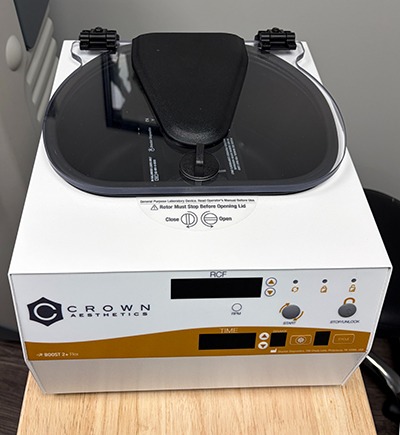
Your blood contains platelets and other components involved in the body's natural healing processes. During PRP treatment, a small amount of blood is collected and processed in a specialized centrifuge to separate the platelet-rich plasma from other blood components.
The resulting PRP contains a concentration of platelets and naturally occurring growth factors.
When PRP is carefully introduced into the treatment area, these components may help support the body's natural tissue-repair processes and stimulate collagen and other regenerative responses.
PRP is sometimes described as a "natural" regenerative treatment because it uses material derived from your own body.

Why Do Women Consider PRP?
Women seek PRP for a variety of reasons. Some are looking for support with changes associated with menopause, while others are interested in addressing changes following childbirth, aging or other life events.
Depending on your individual circumstances, PRP may be considered for concerns such as:
Vaginal or vulvar dryness
Changes in intimate tissue quality
Reduced sensitivity
Changes in sexual comfort
Discomfort associated with tissue changes
Changes in the appearance or texture of vulvar tissue
Concerns related to aging or menopause
Changes following childbirth
Desire for a non-surgical approach to intimate wellness
Not every symptom is caused by the same thing, and PRP isn't appropriate for everyone. That's why we begin with a medical consultation rather than simply recommending a treatment.


PRP and Menopause
Menopause can bring significant changes to a woman's body, including changes to the vulvar and vaginal tissues.
As estrogen levels decline, some women experience symptoms such as:
Vaginal dryness
Burning or irritation
Changes in sensitivity
Discomfort during intimacy
Changes in tissue elasticity
Genitourinary symptoms
Changes in sexual confidence
These symptoms can be part of a condition known as Genitourinary Syndrome of Menopause (GSM).
PRP may be considered as one option for women seeking regenerative support for intimate tissues. However, PRP is not a replacement for a complete menopause assessment.
At U Renew, Dr. Aluko can discuss your symptoms and help determine whether PRP, another treatment, or a combination of approaches may be more appropriate for you.
You don't have to simply accept uncomfortable changes as "just part of getting older."


PRP for Women's Intimate Health
PRP treatment for intimate health involves carefully injecting the prepared platelet-rich plasma into selected areas of the vulvar or vaginal region.
The treatment is tailored to your anatomy, symptoms and goals.
The objective is to support the body's natural healing and regenerative processes rather than surgically altering the tissue.
Depending on your individual concerns, PRP may be discussed as a treatment option for:
Tissue Quality
PRP may help support collagen production and tissue regeneration, potentially improving the overall quality and resilience of treated tissue.
Dryness & Comfort
Some women seek PRP as part of a treatment plan addressing changes in intimate tissue associated with menopause or aging.
Sensitivity
Changes in tissue quality and hormonal status can affect intimate sensation. PRP may be considered when reduced sensitivity is one of your concerns.
Intimate Confidence
Changes to intimate tissue can affect how a woman feels about her body and her intimate relationships. Improving comfort and addressing concerns can help some women feel more confident.
Results vary from person to person, and PRP is not guaranteed to resolve every symptom.


What Happens During a PRP Treatment?
Your treatment takes place in a private, physician-led clinical environment.
Step 1: Consultation
Before treatment, Dr. Aluko will discuss your concerns, medical history, medications, symptoms and goals.
This is an important part of the process. We want to understand why you are seeking treatment, not simply which procedure you are interested in.
Step 2: Blood Collection
A small amount of your blood is collected, similar to a routine blood sample.
Step 3: PRP Preparation
Your blood is placed into a specialized centrifuge. The centrifuge separates the blood components so that the platelet-rich plasma can be collected.
Step 4: Treatment
The prepared PRP is carefully administered to the selected treatment area using targeted injections.
A topical or local numbing approach may be used to improve comfort.
Step 5: Aftercare
You will receive instructions about caring for the treated area and what to expect during the recovery period.


Is PRP Right for Me?
PRP isn't a one-size-fits-all treatment.
During your consultation, Dr. Aluko will consider:
Your current symptoms
Your medical history
Your medications
Menopausal status
Previous treatments
Your personal goals
The condition of the treatment area
Whether PRP is medically appropriate
In some cases, another treatment may be more appropriate.
That's why we believe in medical assessment before treatment.
Our goal isn't to sell you a procedure. Our goal is to help you understand your options and make an informed decision about your care.

What Are the Benefits of Using Your Own PRP?
One of the appealing aspects of PRP is that it is prepared from your own blood.
Because the treatment uses your own blood components, PRP does not involve introducing a synthetic filler or foreign tissue into the treatment area.
Potential advantages include:
Uses your own blood
Non-surgical approach
No implanted device
Personalized treatment
Minimal downtime for many patients
Supports the body's natural healing processes
However, "natural" does not mean risk-free, and PRP isn't suitable for everyone. A medical assessment is important before proceeding.


Does PRP Hurt?
Most patients tolerate PRP treatment well.
Because the treatment involves injections, some temporary discomfort, pressure, stinging or tenderness may occur.
At U Renew, we take steps to make your experience as comfortable as possible, which may include topical numbing and other comfort measures.
Your comfort matters to us.


What Can I Expect After Treatment?
PRP is generally associated with little downtime, although your individual recovery can vary.
You may experience temporary:
Mild tenderness
Redness
Swelling
Sensitivity at the injection sites
These effects generally improve as the treated area heals.
Dr. Aluko will provide specific aftercare instructions based on your treatment.
When Will I See Results?
PRP works by supporting the body's natural regenerative processes, so results are not necessarily immediate.
Some women may notice changes relatively soon after treatment, while others may experience gradual improvement over time.
Your response can depend on factors including:
Your age
Hormonal status
Tissue health
The condition being treated
Your body's individual response
The treatment area
Whether additional treatments are recommended
During your consultation, we can discuss realistic expectations based on your individual circumstances.


How Many PRP Treatments Will I Need?
The number of treatments varies.
Some patients may choose a single treatment, while others may benefit from a series depending on their goals and response.
Rather than using a predetermined treatment schedule for everyone, we create an individualized recommendation based on your needs.
Your treatment plan should be about you, not a package.


PRP Compared With Other Women's Health Treatments
There are several treatment options available for women experiencing menopause-related or intimate health concerns.
PRP is just one option.
Depending on your symptoms and medical history, Dr. Aluko may discuss other treatments available at U Renew, including:
MonaLisa Touch®
A laser-based treatment designed to address certain symptoms associated with vaginal and vulvar tissue changes.
BTL Emsella®
A non-invasive pelvic floor treatment that may be considered for women experiencing urinary incontinence.
Menopause Consultation
A physician-led assessment to discuss menopause symptoms, treatment options and overall women's health.
Puff Labia Rejuvenation
A treatment designed to restore volume to the labia majora and address changes in appearance, tissue quality and cushioning.
The right treatment depends on what is causing your symptoms and what you want to achieve.
Ready to Explore Your Options?
If you've noticed changes in intimate comfort, sensitivity, dryness or tissue quality, you don't have to be embarrassed—and you don't have to figure it out alone.
At U Renew Medical Clinic in Stony Plain, you'll have the opportunity to speak privately with a physician about your concerns and explore whether PRP or another treatment may be appropriate for you.
Frequently asked questions
What is PRP and how does it work for vaginal rejuvenation?
Platelet-Rich Plasma (PRP) is a regenerative treatment that uses your body’s own blood to stimulate healing, collagen production, and tissue rejuvenation.
At our Stony Plain clinic, just minutes from Edmonton, PRP is commonly used for vaginal rejuvenation to improve skin tone, tighten tissue, and enhance overall intimate wellness. The platelets in PRP release growth factors that help repair and renew cells naturally.
How long does a PRP treatment take?
A PRP session typically takes 60 to 90 minutes, including:
Blood collection
Processing in the centrifuge
Numbing and treatment application
This makes it a convenient in-clinic procedure for patients traveling from Stony Plain, Spruce Grove, or the Edmonton area.
What areas can be treated with PRP injections?
PRP is a versatile treatment that can be used in multiple areas, including:
Vaginal and vulvar rejuvenation (tone, sensitivity, dryness)
Face (skin rejuvenation, fine lines, texture)
Scalp (hair thinning and hair restoration)
Many patients in Stony Plain and the Edmonton area choose PRP for its natural approach to improving both aesthetic appearance and function.
How long do PRP results last?
PRP results can last several months to years, depending on your body’s response and lifestyle factors.
Because PRP works by stimulating natural regeneration, results develop gradually and may continue improving over time. Maintenance treatments may be recommended to prolong results.
Does PRP treatment hurt?
Most patients experience only mild discomfort during PRP treatment, often described as a brief tingling or warming sensation.
To maximize comfort, we apply a topical numbing cream and use cooling techniques throughout the procedure.
Is there any downtime after PRP treatment?
PRP requires little to no downtime. After treatment, you may experience mild redness or slight swelling in the treated area, which typically resolves within 24 hours.
Some patients prefer scheduling treatments toward the end of the week to allow for a short recovery period, especially if PRP is combined with other procedures.
How is PRP treatment performed?
PRP treatment begins with a small blood draw. The blood is then spun in a centrifuge to separate the platelet-rich plasma.
The PRP is carefully reintroduced into the treatment area—either through targeted injections or microneedling—to stimulate tissue repair and regeneration. The entire process is performed in a clinical setting and tailored to your specific concerns.
How many PRP treatments will I need?
Many patients notice improvement after one session, but optimal results are often achieved with a series of treatments.
Your personalized treatment plan will depend on your goals, condition, and how your body responds to PRP. This will be discussed during your consultation at U Renew Clinic.
Is PRP safe?
Yes—PRP is considered very safe because it uses your own blood, reducing the risk of allergic reaction or rejection.
It is widely used in both medical and aesthetic treatments and has a strong safety profile when performed by trained professionals.
What are the side effects of PRP injections?
Side effects are typically mild and temporary. The most common include:
Redness
Swelling
Minor tenderness
These effects usually resolve within a short period after treatment.
Who is not a good candidate for PRP?
PRP may not be suitable for individuals with certain medical conditions or blood disorders.
A full assessment will be completed during your consultation to ensure PRP is safe and appropriate for you.
How much does PRP treatment cost in Stony Plain?
The cost of PRP treatment varies depending on the area treated and the number of sessions required.
We offer personalized consultations at U Renew Clinic to assess your needs and provide transparent pricing. Many patients from Stony Plain and the Edmonton area consider PRP a valuable investment in long-term skin and intimate health.
Ready to Explore Your Options?
If you've noticed changes in intimate comfort, sensitivity, dryness or tissue quality, you don't have to be embarrassed—and you don't have to figure it out alone.
At U Renew Medical Clinic in Stony Plain, you'll have the opportunity to speak privately with a physician about your concerns and explore whether PRP or another treatment may be appropriate for you.
U Renew
Phone: 780-968-6888
Cell/Text: 780-264-2874
hello@urenew.ca
© 2026 Bisi Aluko Professional Corporation | Privacy Policy | Contact