NO REFERRAL NEEDED • PHYSICIAN-LED


Common Symptoms of Perimenopause and Menopause
Dr. Bisi Aluko
7/1/20263 min read
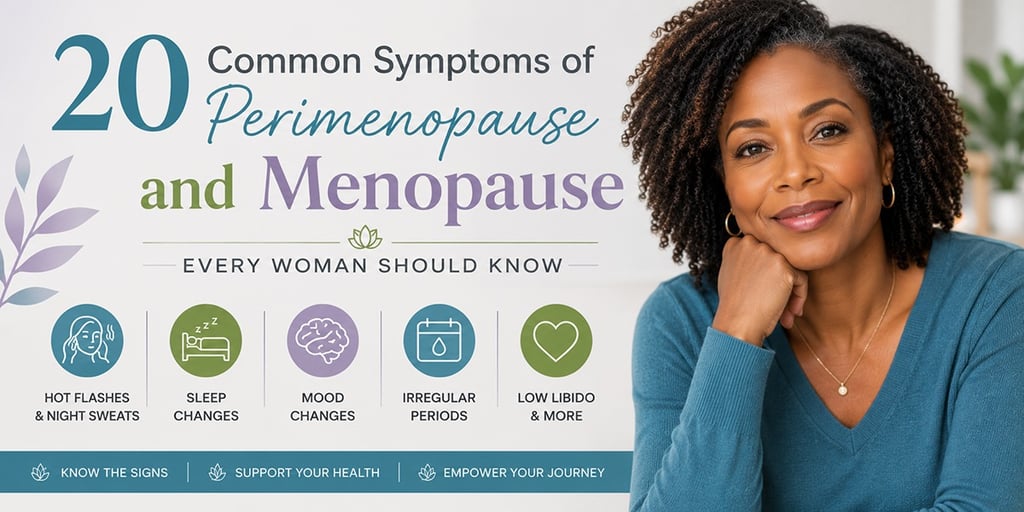

Perimenopause and menopause are natural stages in a woman’s life that occur as hormone levels begin to change. While every woman experiences this transition differently, many women notice physical, emotional, and hormonal symptoms that can affect their daily lives.
Understanding the symptoms of perimenopause and menopause can help you recognize the changes occurring in your body and seek appropriate treatment when needed.
What Is Perimenopause?
Perimenopause is the transitional stage leading up to menopause. It typically lasts between three and five years, although some women may experience symptoms for a longer period. During this time, estrogen and progesterone levels fluctuate, causing changes in menstrual cycles, mood, sleep patterns, and overall health.
What Is Menopause?
Menopause marks the end of a woman’s reproductive years and is officially diagnosed after 12 consecutive months without a menstrual period. Most women experience menopause between the ages of 45 and 55.
As ovarian function declines, hormone production decreases, leading to a variety of symptoms that can range from mild to severe.
Common Symptoms of Perimenopause and Menopause
1. Mood Changes
Fluctuating hormone levels can affect brain chemistry, leading to mood swings, increased emotional sensitivity, anxiety, or unexpected feelings of sadness.
2. Irregular Periods
One of the earliest signs of perimenopause is a change in menstrual cycles. Periods may become shorter, longer, heavier, lighter, or more unpredictable.
3. Vaginal Dryness
Lower estrogen levels can reduce natural vaginal lubrication, causing vaginal dryness, irritation, and discomfort during intimacy.
4. Hot Flashes
Hot flashes are sudden feelings of warmth that often begin in the face, neck, and chest before spreading throughout the body. They are among the most common menopause symptoms.
5. Urinary Incontinence
Many women experience bladder leakage, urgency, or increased frequency of urination as pelvic floor muscles weaken and hormone levels decline.
6. Depression
Hormonal changes, sleep disturbances, and life transitions can contribute to feelings of depression or emotional distress during perimenopause and menopause.
7. Irritability
Women may become more easily frustrated, impatient, or emotionally reactive due to fluctuating hormone levels.
8. Insomnia and Sleep Problems
Difficulty falling asleep, staying asleep, or experiencing restful sleep is common during perimenopause and menopause.
9. Changes in Menstrual Flow
Periods may become significantly heavier or lighter than usual as hormone levels fluctuate.
10. Night Sweats
Night sweats are hot flashes that occur during sleep and can cause excessive sweating, disrupted sleep, and fatigue.
11. Low Libido
Changes in hormone levels, vaginal dryness, and other menopause symptoms can contribute to a reduced interest in sexual activity.
12. Irregular Heartbeat
Some women notice temporary changes in heart rhythm during perimenopause due to hormonal fluctuations.
13. Heart Palpitations
Heart palpitations can feel like a racing, pounding, or fluttering heartbeat and are a commonly reported symptom during menopause.
14. Headaches
Hormonal fluctuations can trigger more frequent headaches or migraines in some women.
15. Joint and Muscle Pain
Estrogen helps support joint health and reduce inflammation. Lower estrogen levels may contribute to joint aches, stiffness, and muscle discomfort.
16. Fatigue
Persistent tiredness and low energy levels are common and may be worsened by sleep disturbances and other menopause symptoms.
17. Increased Allergy Sensitivity
Hormonal fluctuations can influence histamine production, making some women more sensitive to allergens during perimenopause.
18. Skin Changes
Reduced estrogen levels can lead to dry, itchy, thinner, and less elastic skin.
19. Weight Gain
Changes in metabolism, hormone levels, and body composition can make weight management more challenging during menopause.
20. Hair Thinning and Hair Loss
Estrogen and progesterone support healthy hair growth. As these hormone levels decline, some women may experience hair thinning or increased hair shedding.
When Should You See a Doctor?
While menopause is a natural life transition, its symptoms can significantly impact your quality of life. If you are experiencing bothersome symptoms such as hot flashes, vaginal dryness, urinary incontinence, sleep disturbances, mood changes, or low libido, it is important to speak with a healthcare provider.
Menopause Treatment and Support at U Renew
At U Renew in Stony Plain, Alberta, we provide comprehensive menopause consultations and personalized treatment options to help women manage perimenopause and menopause symptoms. Depending on your needs, treatment may include hormonal or non-hormonal therapies, lifestyle recommendations, and advanced wellness solutions designed to improve your comfort, confidence, and overall quality of life.
Contact U Renew today to schedule a menopause consultation and learn how we can help you navigate this important stage of life with confidence.
Say Hello!
Phone: 780-968-6888
Text: 780-264-2874
hello@urenew.ca
Located in
Amaris Medical Centre
5012 50 Street
Stony Plain, AB T7Z 1T3